How Forex Volatility Quietly Eats Into SME Profits :
Most SME owners I know can rattle off the price of their raw materials, their gross margins, and exactly how long customers take to pay up. But ask them this: “How much profit did you lose to currency…
And What Smart Leaders Are Doing About It
Most SME owners I know can rattle off the price of their raw materials, their gross margins, and exactly how long customers take to pay up. But ask them this: “How much profit did you lose to currency swings last quarter?” Suddenly, everyone’s quiet. Not because the answer doesn’t matter, but because nobody can see it clearly.
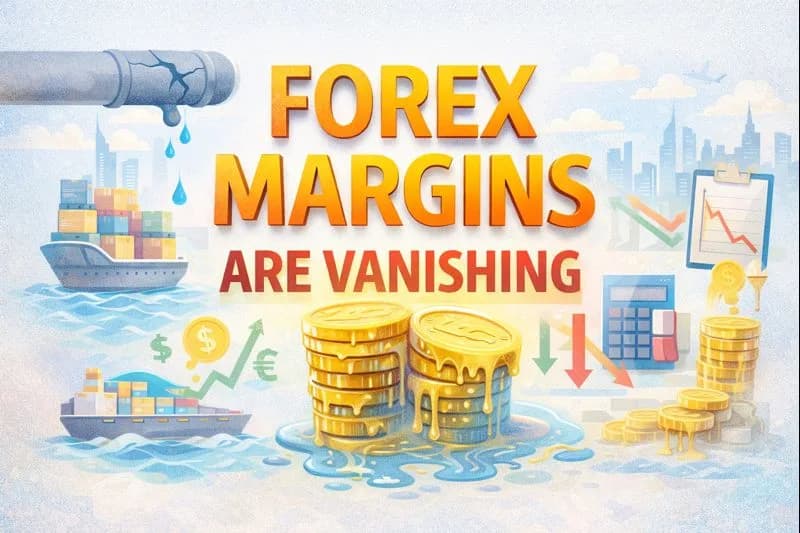
Forex volatility is one of those sneaky profit drains that hardly gets the attention it deserves, especially for UAE SMEs. It never shows up as a neat line on your P&L. Instead, it hides in landed costs, supplier invoices, customer receipts, and those “just for now” Forex differences that quietly add up, month after month.
With margins getting tighter, payments coming in slower, and financing only getting pricier, ignoring this stuff costs real money.
1. The Hidden P&L Killer Most SMEs Ignore
If your business deals with imports, exports, or pays invoices in USD, EUR, GBP, INR, ZAR or CNY, congratulations, you already have a forex book, whether you like it or not.
Here’s how volatility chips away at profits:
- You price your stock using last month’s exchange rate.
- A customer places an order today, but you pay your supplier two or three months later.
- You bill clients in AED but pay your own bills in EUR.
- You sit on foreign currency balances, just waiting for rates to “normalize.”
Honestly, these don’t seem reckless. They just feel like normal business decisions. But even a 2–4% swing in currencies over a quarter can wipe out your entire net margin, especially if you’re in trading, logistics, food imports, EPC subcontracting, or wholesale distribution.
Unlike a bad debt, forex risk doesn’t cause big drama. It just erodes your numbers, slowly and quietly.
2. Why “We’ll Absorb It” Is a Dangerous Move
A lot of SME leaders tell me, “We don’t speculate. If rates move, we just absorb it.” That approach worked when you had smaller volumes and currencies didn’t bounce around much.
That’s just not the world we’re in anymore.
Now you’re dealing with:
- Longer credit cycles from suppliers
- Customers pushing out payments for 60, 90, sometimes even 120 days
- Less room to increase prices
- Banks getting stricter on forex limits and overdrafts
Choosing to absorb forex losses now is just accepting permanent margin cuts.
Smart leaders aren’t absorbing risk. They’re structuring around it.
3. The Real Problem Isn’t Volatility, It’s Timing
Forex volatility really stings when your cash flows and your currency exposures don’t line up.
You see it all the time:
- You pay a supplier in EUR today, but your customer settles in AED weeks or months later.
- You open an LC in EUR, but the sales contract isn’t even locked in yet.
- You get advance payments, but your costs hit much later.
It’s not the exchange rate itself that hurts. It’s the mismatch between when money changes hands and when rates move.
This is where a lot of SMEs get tripped up. Most banks don’t lay it out clearly, and finance teams are usually stretched thin already.
4. What Smart SME Leaders Are Doing Differently
The most resilient SME leaders we work with aren’t out there trying to beat the market or guess where currencies are headed.
Instead, they do three simple, effective things:
a) They Lock Margins, Not Rates
Instead of hoping the market turns in their favor, they use forward contracts to lock in the actual cost of payables or receivables. The goal isn’t to “win” at forex, it’s about knowing where your gross margin stands.
b) They Match Financing With Currency Exposure
Importers using trade finance or invoice discounting are getting smarter about matching the currency they borrow in with the currency they owe. This cuts down on translation risk and stops nasty surprises at settlement.
c) They Put Forex on the Board Agenda
Forex isn’t something junior treasury staff or accountants handle in the background anymore. Smart leaders look at:
- Net open currency positions
- Exposure by month, not just annually
- Forex impact on cash flow, not just what shows up in accounting
Just getting serious about this can recover 1–3% of EBITDA. That’s real money.
5. The Biggest Forex Mistake SMEs Make With Banks
A lot of SMEs lean on their bank for forex . But banks aren’t paid to maximize your margins.
Common issues:
- Banks bake in wide forex spreads under the guise of “convenience.”
- They rarely offer real hedging advice.
- Limits are tied to high cash margins.
- Forex pricing gets bundled so you can’t see what you’re actually paying.
So, SMEs end up overpaying, quietly, and again and again.
Smart leaders split out:
- Financing choices
- Forex risk management
- Execution pricing
Keeping these separate makes a big difference.
6. Why Doing Nothing Is Now the Riskiest Move
Right now:
- Volatility isn’t going away, it’s built into the system
- Supply chains are fragile
- Geopolitical shocks hit currencies instantly
Ignoring Forex risk doesn’t keep things stable. It just leaves you exposed, with no control.
The SMEs that come out ahead in the next cycle won’t be the boldest: just the most disciplined.
They’ll:
- Protect margins before chasing sales growth
- Use forex as a tool, not an afterthought
- Build simple, repeatable hedging playbooks
Nothing fancy. Nothing speculative. Just being intentional.
7. Where Capmob Fits Into All This
At Capmob, we work with UAE SMEs in trading, logistics, F&B, manufacturing, and contracting, people who know exactly what these challenges feel like.
We’re not here to push “products.” That’s not our thing.
We’re here to help business owners:
Figure out their real forex exposure
Set up straightforward hedging that matches their cash flow
Blend trade finance, working capital, and forex in a smart, practical way
Stop hidden profit leaks, without making things more complicated
When you get forex right, it stops being something to worry about. It actually helps steady the ship.
Final Thought
Forex volatility doesn’t sink a business overnight. It just chips away at you, month after month, until one day you wonder why your margins are shrinking, even though sales are up.
The sharpest SME leaders aren’t fixated on where the Euro’s heading next. They’re focused on making sure currency swings never have the final say on profit.
If you want to check your forex exposure, look at hedging, or just make sure currency risk isn’t lurking in your deals, drop us a . We’ll go through it together, no jargon, no guessing, just straight answers.
Because right now, protecting your margin is the smartest way to grow.